
Find Conroe Residents Carefully
Start with an official record that fits the question. A current parcel address is best checked in the appraisal record, while a name connected to a property can be followed through the County Clerk index. A Montgomery County voter match is another identity check, not a household list. For an older person or address, the strongest local trail may be a dated directory, newspaper notice, deed, or census schedule. Keep the spelling, middle initial, suffix, date, and address format exactly as found. That small discipline helps separate similar names in a fast-growing county.
Conroe is the Montgomery County seat, but a Conroe postal address can sit outside the incorporated city. Treat the city, postal, and parcel labels as separate facts. An owner mailing address can differ from the place where the parcel sits. A recorded party can be a trustee, estate, business, or former owner. These distinctions make a residents directory useful without turning one public hit into a claim about every person in a home.
- Use the MCAD property portal when you have an owner name, address, account number, or parcel identifier.
- Compare the property location with the tax mailing field and retain the PropID or GEO ID for later searches.
- Search the County Clerk index for a deed, plat, lien, or other instrument tied to the owner or legal description.
- Use the county voter lookup only for a lawful identity match, then read any result within Texas privacy rules.
- For a past household, check the dated city-directory holdings, local newspapers, and the appropriate records custodian.
Note: A second independent identifier is especially important when a surname appears in several Conroe records.
Conroe Resident Record Offices
Several custodians keep the pieces that form a Conroe residents directory. The Montgomery County Clerk keeps the public real-property index and county record series. Montgomery Central Appraisal District keeps current appraisal and parcel fields. The Elections Administrator maintains the county registration lookup. City departments add permit and map context, while state agencies hold statewide court and vital-record routes. The Conroe street directory follows the address-by-address route in more depth.
Montgomery County Clerk
210 W. Davis (Hwy 105)
Conroe, TX 77301
936-539-7885, weekdays 8–5
Montgomery Central Appraisal District
Current parcel and tax-record fields
Owner, address, account, and year search
Public online portal
Montgomery County Elections
9159 Airport Road
Conroe, TX 77303
936-539-7843
The Clerk also offers a mail copy-request form when an online image is unavailable. The form supports up to eight requested records and estimates a 24–72-hour turnaround, subject to staff and volume. A narrow request should name the instrument number, book or volume/page, date range, or address rather than ask the office to research a broad family history.
MCAD Conroe Resident Parcels
The MCAD public portal is the practical starting place for present parcel evidence. Its Compound Text Search can work with an owner, property address, account, PropID, GEO ID, or a legal term, and the year selector narrows the appraisal record. A result may show a PropID, GEO ID, Tax Office ID, owner, DBA, and property address. Open the parcel card before treating any one field as proof. It separates a location address from the mailing address associated with the owner or tax account.
| MCAD field | How it helps a Conroe search | Important limit |
|---|---|---|
| Owner or secondary owner | Starts a name-to-parcel check | Owner may not occupy the parcel |
| Location or situs address | Places the property on the ground | It can use a different format from USPS |
| Mailing address | Shows tax-account correspondence | It is not automatically a resident address |
| PropID, GEO ID, legal description | Bridges the parcel to GIS, plats, and deeds | Copy each identifier exactly |
The captured MCAD search screen shows the property-search entry point used for those field paths.
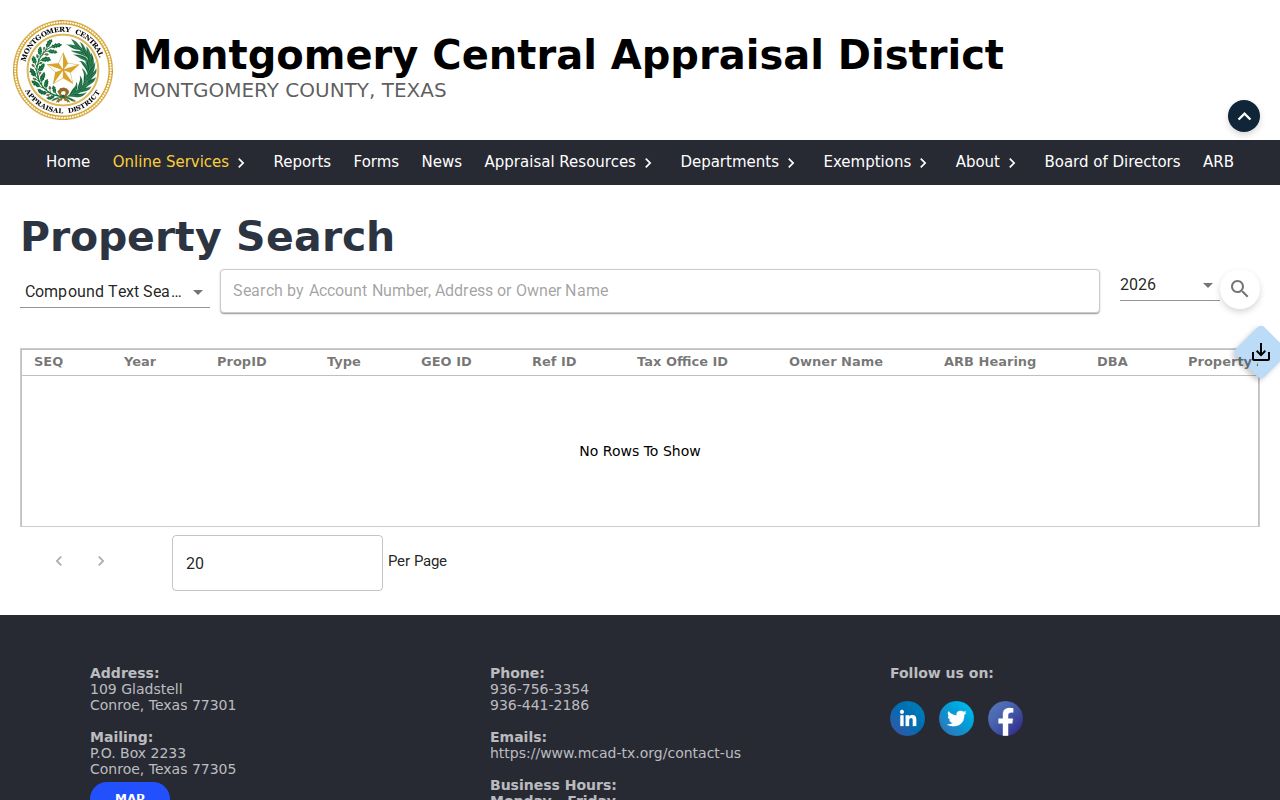
Use a parcel result as a dated property record, then compare it with a deed or voter match instead of assuming it lists every resident.
Conroe Voter Registration Matches
The county voter registration lookup has Last Name, First Name, and day/month/year date-of-birth controls. Those fields can help distinguish a person from a similar name, but a no-match can also reflect a spelling issue, a recent move, suspense status, or an address-protected record. Texas voters do not register by party, and a public registration record does not show a ballot choice. A result is one record-specific check, not a current household census.
The county street form accepts house number, street name, and ZIP Code. Its instructions say to omit directions and street types and permit partial street names. That makes it useful after a parcel address is known, though it does not establish an exportable list of every voter along a block. Texas Election Code sections 13.004, 18.005, and 18.009 protect fields and restrict use. The law bars using voter data to advertise or promote commercial products or services.
The Montgomery County lookup provides the official name-and-date entry route.
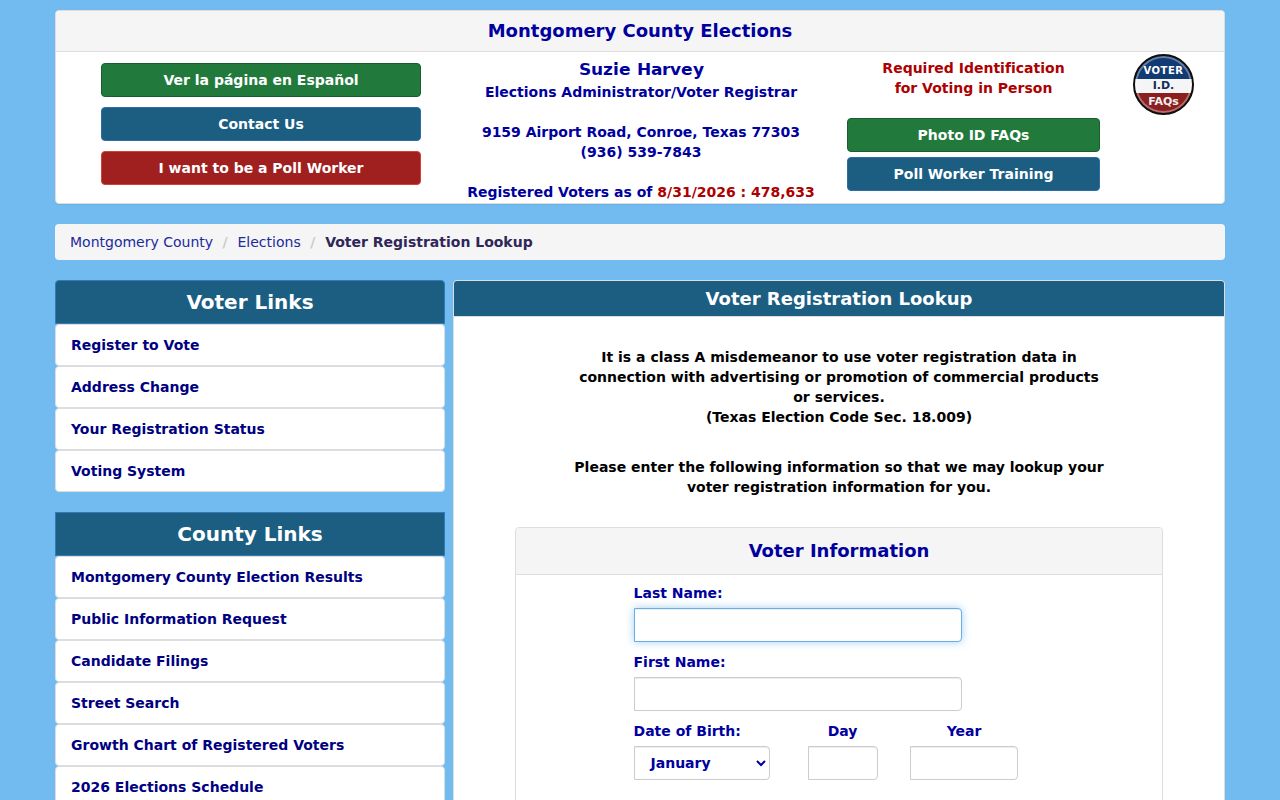
Keep a voter match alongside a parcel, record date, or court case number so a common name is not overread.
Map a Conroe Resident Address
Montgomery County’s What’s Around Me map adds context that a property card cannot. Select a parcel, or a hex grid where a parcel is unavailable, and inspect nearby address points. The map layers include parcels, floodplain, watersheds, municipalities and ETJs, school districts, ESDs, MUD/WCID districts, roads, utilities, precincts, census tracts, and elected-representative areas. CityView adds city limits, surrounding cities, buildings, units, streets, and MC911 address points. Map points locate features; they do not name a household.
Use the same address in the county map and CityView when the postal label seems uncertain. A location can be within the broader Conroe postal area but outside city limits. For a block question, click touching parcels one at a time, preserve their legal descriptions, and then decide whether MCAD or the Clerk index has a relevant public record. The county GIS item reported a June 2026 update, so live layers should be checked again before relying on a map result.
The county parcel viewer is the official starting point for that comparison.
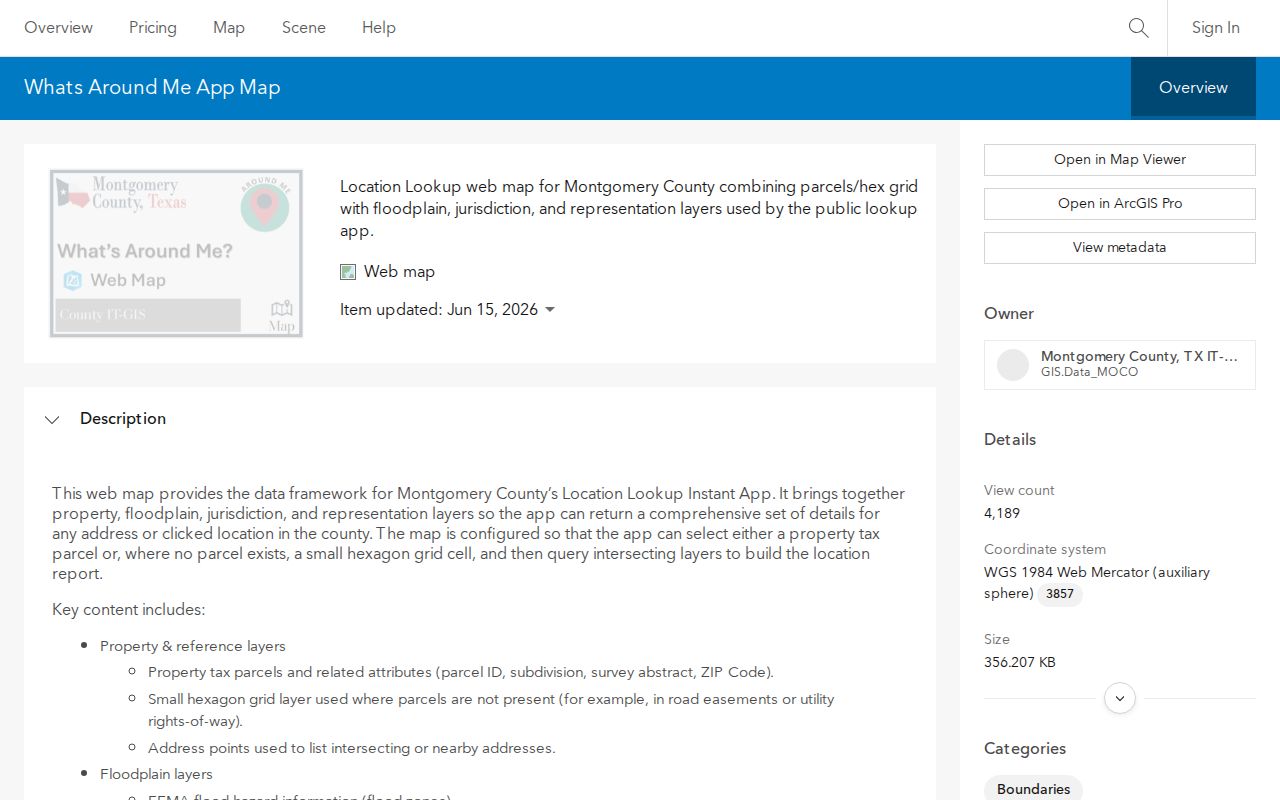
Parcel boundaries and address points can explain why two records use different city or postal labels.
Current Conroe Resident Directories
A current residents directory is a group of limited official rolls, not one master list. Each system answers a narrow question. MCAD identifies a parcel owner and related tax fields. The Clerk identifies parties in recorded instruments. Elections can confirm a registration match under its rules. County GIS supplies land and boundary context. A court file or state registry may add a dated record, but it should never replace identity checking. The table separates the source from the conclusion it can support.
| Conroe source | What it can establish | Custodian | Access route |
|---|---|---|---|
| MCAD parcel card | Owner, mailing field, situs, legal description | Montgomery Central Appraisal District | Public owner/address/account search |
| Voter lookup | Registration match and status where available | County Elections | Name plus date-of-birth interface |
| Recorded instrument index | Grantor, grantee, instrument, and recording date | Montgomery County Clerk | Online index, office, or copy request |
| County GIS | Parcel, address-point, district, and boundary context | Montgomery County IT-GIS | Public map click and query tools |
| Library local-history material | Period address, newspaper, yearbook, or directory lead | MCM Library and TSLAC | Library, archive, and partner-collection routes |
When the goal is to confirm one person across these records, the Conroe resident lookup gives a name-first workflow. A record that does not fit the person, date, or address is a reason to pause, not a reason to fill in the gap.
Conroe Clerk Record Trails
Montgomery County Clerk Public Records Search connects present parcels to dated instruments. The office says the county record series dates to 1838, while the portal’s exact web-index start is not stated. Quick Search includes a Search Term, start and end dates, short date presets, and choices for Index Only or Index & Full Text OCR. Two or more index words are treated as separate words, while OCR can search a phrase. A street name alone is a weak deed search because a legal description may replace the modern address.
| Clerk search field | Use |
|---|---|
| Search Term | Grantor, grantee, subdivision, document type, or document number |
| Date Range | Limits results by recorded-date window |
| Index Only | Searches indexed terms |
| Index & Full Text OCR | Adds OCR text and supports phrase searching |
Record the grantor, grantee, instrument number, recording date, document type, and legal description. Then search a prior grantor as a grantee to move backward. Images can require an account or cart. If that route fails, the Clerk’s plain copies are $1 per page and certified copies add $5 per document; its specific real-property recording fees differ from general public-information charges.
The official Clerk index shows the recorded-search entry point.
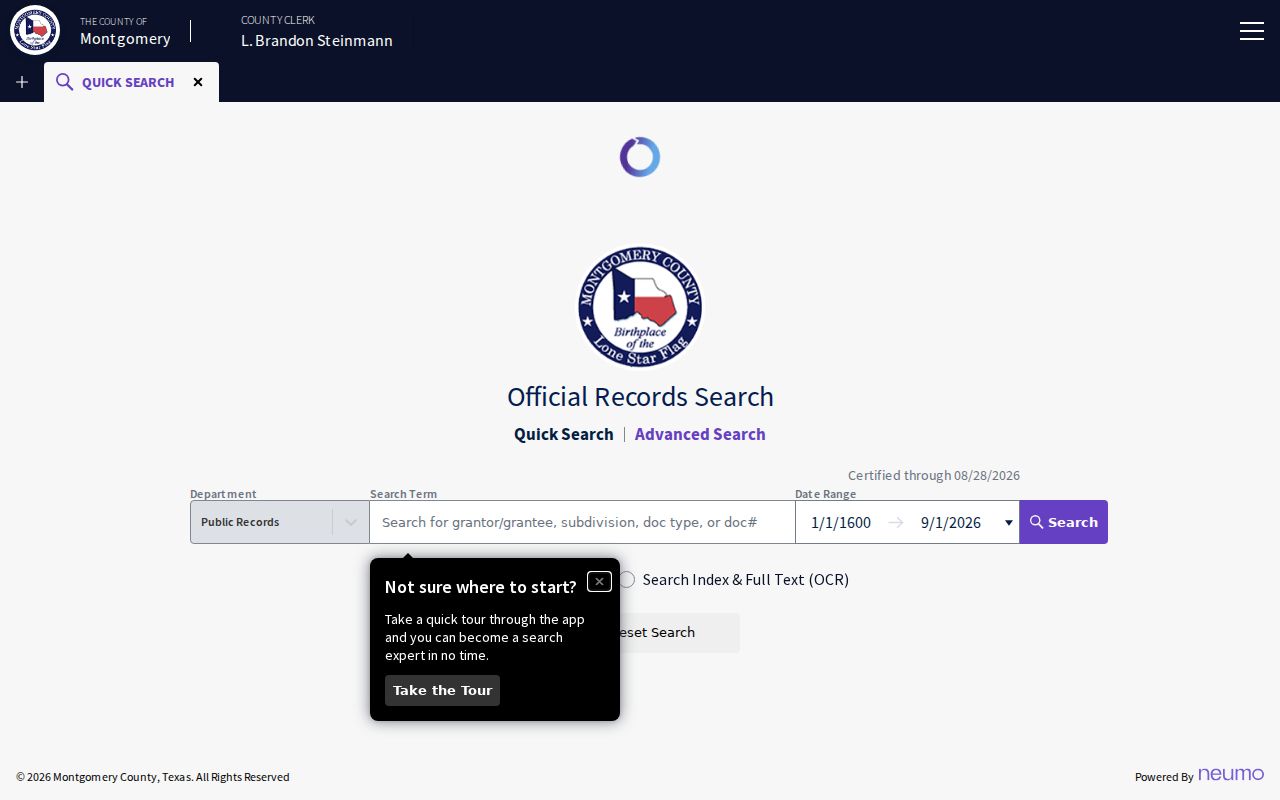
An instrument trail is evidence of a recorded party role, not a complete statement of who lived at the parcel.
Conroe Court and Vital Records
Courts and vital custodians answer different questions from a residents directory. Montgomery County Odyssey offers Criminal Records, Civil & Probate Case Records, and Court Calendar entry points. Texas re:SearchTX adds a statewide participating-court route, although coverage and documents vary, and public downloads may carry charges. Conroe Municipal Court is not a court of record, so a payment screen should be checked against an official docket or requested copy. A case name alone does not establish that two people are the same person.
For vital events, the County Clerk handles local forms and local records while Texas DSHS handles statewide birth and death records plus marriage and divorce verifications. Birth records become public after 75 years and death records after 25 years under Tex. Gov’t Code §552.115, subject to stated exceptions. Newer protected records need a qualified requester and identity proof. A DSHS marriage or divorce verification is not the certified license or decree. Most state online orders are described as nonrefundable and take 20–25 business days.
The Texas DSHS vital application index identifies the state forms and record categories.
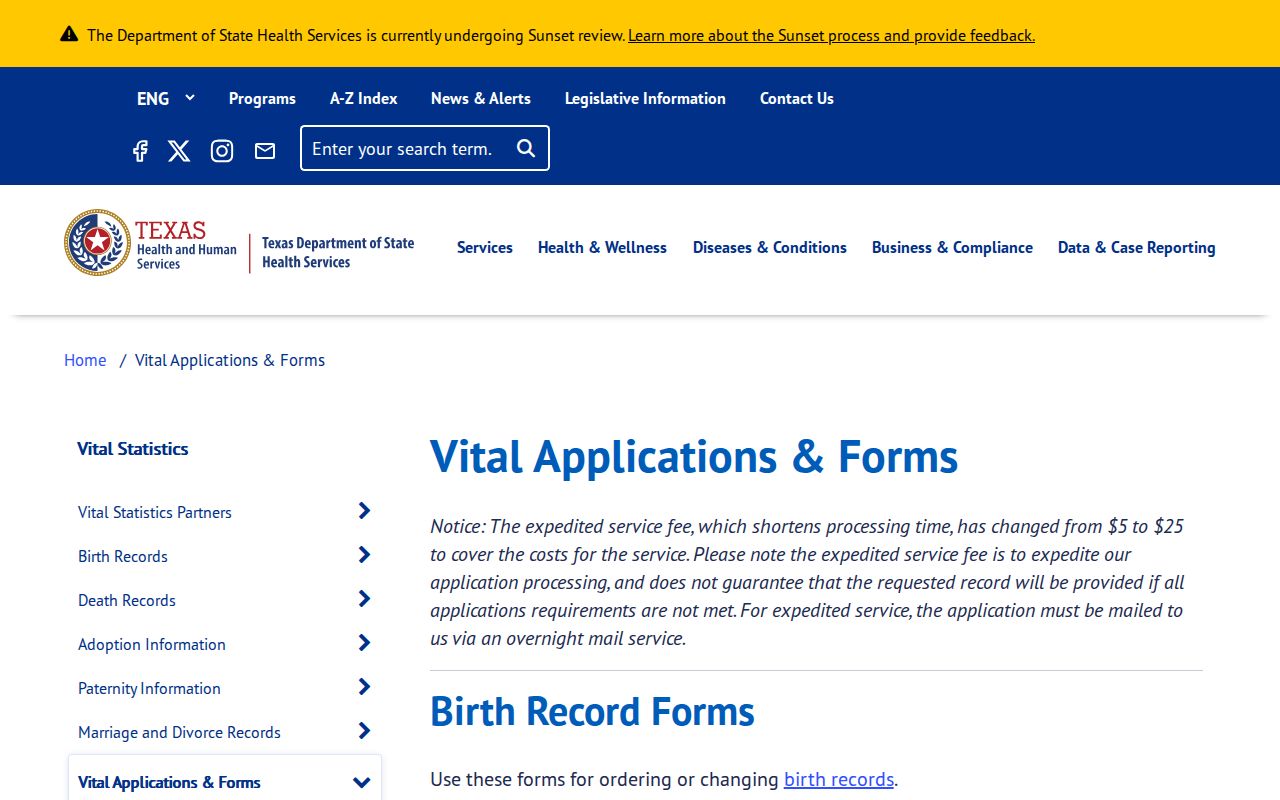
Use the form and custodian that match the event, rather than treating a verification letter as a full court or county record.
Conroe ZIP Labels for Residents
Postal geography is another useful check, but it does not define a municipal boundary. The Texas postal-city list identifies 77301, 77302, 77303, 77304, 77305, 77306, 77384, and 77385 for Conroe. USPS says ZIP codes follow delivery and post-office geography, so the wider 77384 and 77385 areas can overlap surrounding communities. The official list includes 77305, while the USPS Office of Inspector General service-area report lists seven other Conroe service ZIPs and omits it. Preserve that difference and verify a specific address with USPS.
- Situs address
- The place where a parcel or structure is located.
- Mailing address
- The correspondence field associated with an owner or party.
- Legal description
- The subdivision, lot, block, or metes-and-bounds land description used in records.
- Criss-cross directory
- An address-first directory arrangement that can provide a period occupant lead.
- ZIP+4
- A delivery refinement that USPS can return for a specific address.
The Conroe Post Office is at 809 W. Dallas Street and uses 77301-9998. USPS address tools can return a five-digit ZIP, ZIP+4, carrier route, county code, delivery point, and check digit. Follow that result with GIS and MCAD, especially where a postal city and city limit do not match.
The official USPS Conroe location is a reference point for the local postal route.
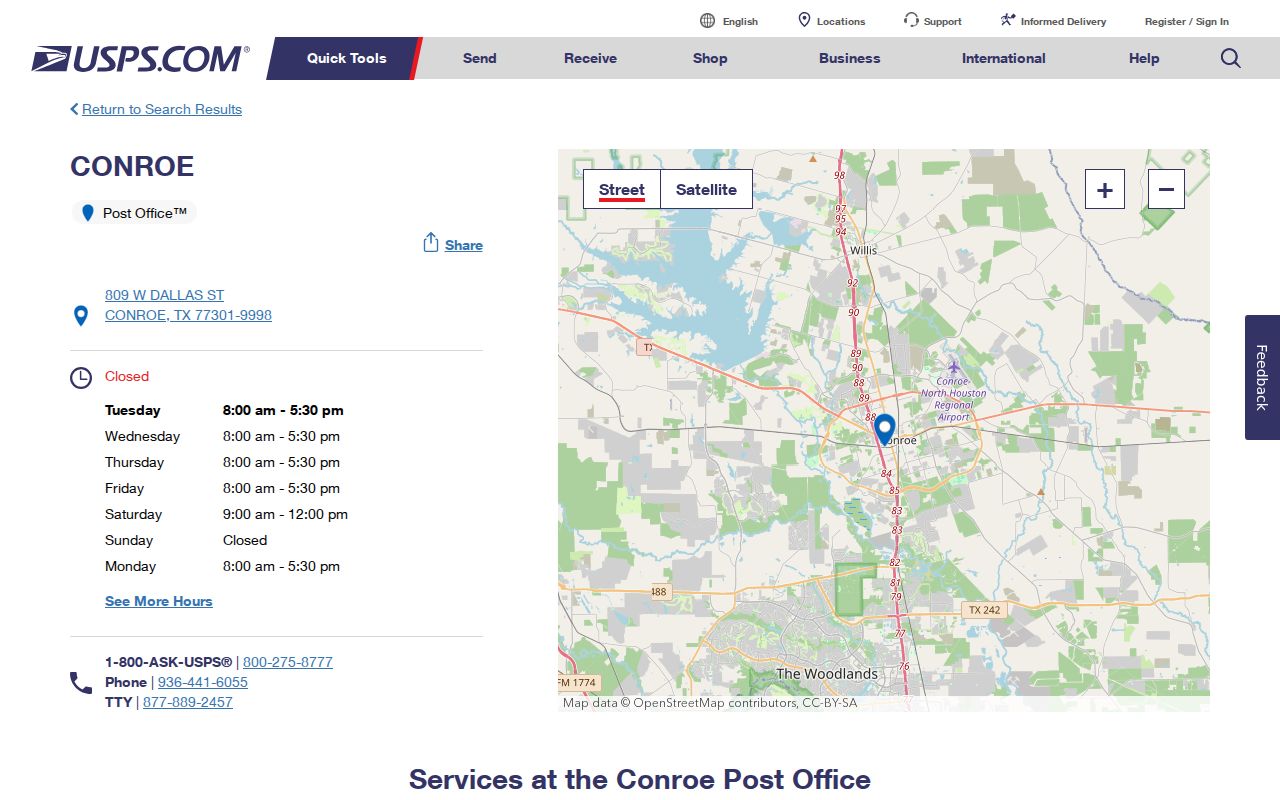
A delivery ZIP helps normalize an address, while GIS remains the better source for parcel and city-limit context.
Texas Privacy in Conroe Records
Public access is record-specific in Texas. The Texas Public Information Act allows written requests for existing government information, but it does not require a custodian to create a new list or answer broad research questions. Keep a copy of a written request and proof of delivery. A governmental body should promptly produce available records, while the ten-business-day framework matters when it seeks an Attorney General ruling. A written estimate is required when expected charges exceed $40.
Texas address-confidentiality and protected-voter rules can suppress an address. The Attorney General’s Address Confidentiality Program serves qualifying survivors and uses a substitute mailing address; it is not a universal removal service. Motor-vehicle information is protected under the federal Driver’s Privacy Protection Act, and marriage-license application SSNs are confidential. A missing field may be intentional, so it should not be treated as proof that a person moved or never existed.
The Montgomery County public-information request instructions show the official route for a narrow written request.
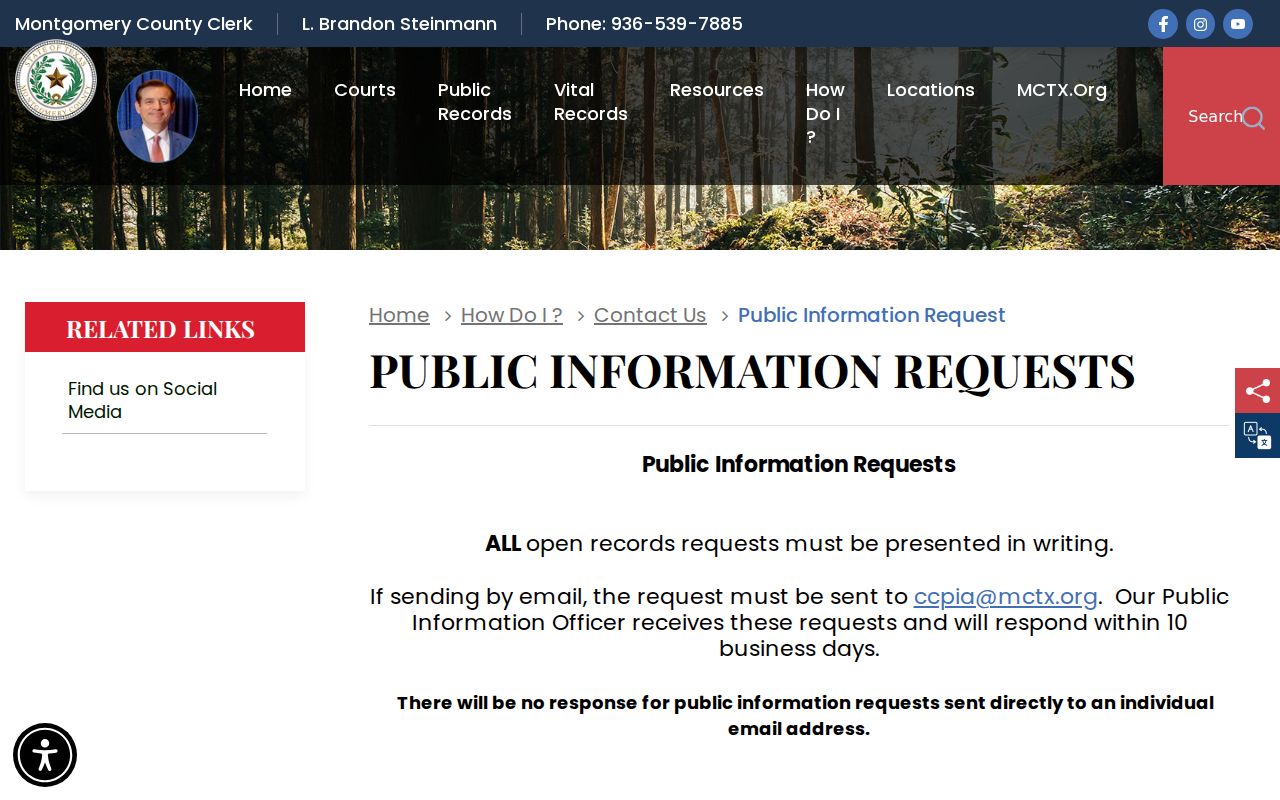
Describe the existing record and the date range, address, instrument, or case number that helps the custodian locate it.
Note: Ask a custodian for the applicable correction, redaction, or request route rather than posting sensitive record images.
Conroe Historical Resident Leads
The local historical trail is unusually layered. TSLAC lists printed Conroe city directories for 1984, 1988, 1990, and 1992. Its guide explains that a directory may list a name, street address, telephone number, spouse, occupation, or a tenure notation, and that reverse entries can start from an address. The volumes are period snapshots. They can omit household members, use abbreviations, or list a person at a business, boarding house, apartment, or rural route. TSLAC’s Reference Reading Room is the main official print and microform access route, and staff do not perform directory searches by phone or send scans by email.
The Montgomery County Memorial Library System’s Central Library, at 104 I-45 North, has a Genealogy & Local History Room. Its UNT partner record describes 584 digitized items, including 564 Conroe Courier items, historical material from the nineteenth century through the 1940s, and one yearbook. The TSLAC city-directory guide explains the access path and reverse-directory method.

Pair a directory year with a deed, tax record, newspaper page, or census schedule before drawing a household conclusion.
Conroe Fire and Record Gaps
Conroe’s history can explain why a modern address trail stops. The county’s record history reaches to 1838, and Conroe became the county seat in 1889. The city history records major fires in 1901 and 1911 near the courthouse-area business district. A digitized 1911 Conroe newspaper page reports that only three buildings remained after the fire. That does not erase every record. It means a search should shift from a modern street number to a business name, legal description, deed, newspaper notice, or later map when the built environment changed.
Montgomery County also reports restoration and higher-resolution scanning work for older images. If a portal scan is hard to read, request an office copy or ask whether an older book or microfilm source is available. The 1931 oil discovery southeast of town and the earlier timber economy created distinct newspaper and land-record periods. Those dates are context for a record trail, not proof that a named person was present.
Conroe Historical Resident Directories
For a dated household question, start with the four verified Conroe directory years and work outward. The full Conroe city directory collection page explains how to read the entries, use a criss-cross volume, and pair the books with census releases. UNT’s local newspapers, the Library of Congress 1938 Conroe Sanborn sheets, cemetery and marker material, and county deeds all answer different parts of the same question. None is a complete list of every resident.
Choose the custodian when a portal ends. The County Clerk handles recorded copies, DSHS handles protected vital access, the court clerk handles official case copies, and the library or archive handles historical shelf material. That sequence keeps a Conroe residents directory grounded in the record’s actual purpose and date.