
Conroe City Directory Collections
The Texas State Library and Archives Commission holds the clearest verified printed run. Its holdings name only four Conroe city directory years: 1984, 1988, 1990, and 1992. Those firm dates make the books valuable. They fall short of proving a complete annual series, so treat them as anchors rather than a full span. The table keeps the confirmed volumes apart from nearby research channels. Those channels add context without promising a digitized Conroe directory.
| Collection | Years | Where Held | Access |
|---|---|---|---|
| Conroe printed volumes | 1984, 1988, 1990, 1992 | Texas State Library and Archives Commission | Reading Room and collection inquiry |
| Texas directory partner collections | Varies by county and time | UNT Portal to Texas History, Briscoe Center, and library databases | Digitized or licensed access varies |
| Conroe Courier and local-history material | Nineteenth century through the 1940s in the reported UNT collection | Montgomery County Memorial Library and UNT | Digitized items, library research, and local databases |
| Local yearbook | One yearbook reported | Montgomery County Memorial Library and UNT partner collection | Historical association lead, not a current address source |
| Federal census schedules | Released under the 72-year rule | Census, National Archives, and genealogy repositories | Historical household comparison |
That four-book pattern deserves care. A name present in 1988 and 1992 but missing in 1990 might point to a move, an omission, a spelling change, or the volume's own scope. The gap alone proves nothing. It cannot show that a person arrived in or left Conroe between the printed years.
Conroe City Directory Years
The TSLAC city-directory holdings list anchors the four verified Conroe years. Run the same surname through 1984, 1988, 1990, and 1992. Run the same street through them too, and you build a small comparison set. Copy the spelling, street line, telephone, and abbreviations exactly as printed. A changed number or shifted house number is a lead, not a conclusion. The intervals run two, two, and two years. Four snapshots are still only four snapshots. Say a person was listed in a named year. Do not assume continuous residence across the gaps. The TSLAC holdings list remains the direct source for the pictured Conroe volumes. It also states their years.
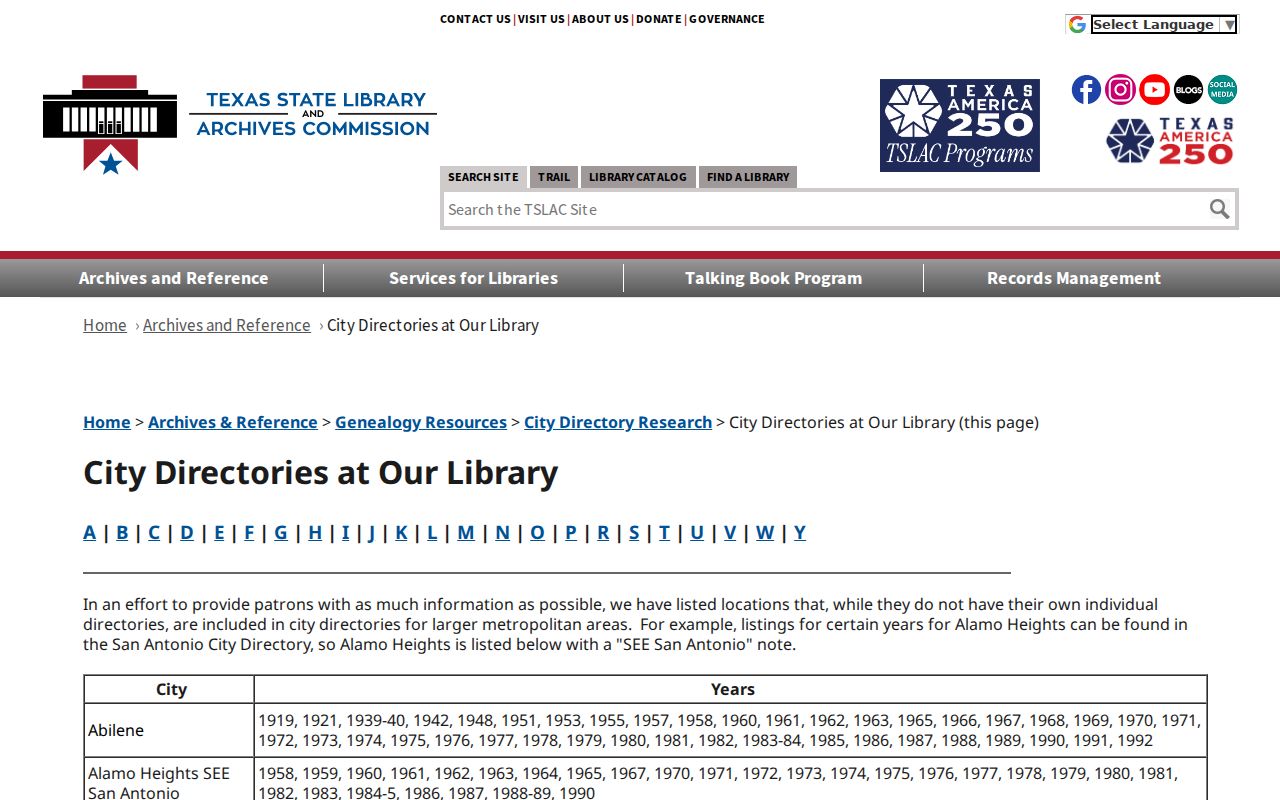
The holdings screen supports the exact-year approach and avoids inventing a continuous local series.
Conroe Library Directory Research
The Montgomery County Memorial Library System bridges printed directories and other local history material. Its Genealogy & Local History Room sits at the Central Library, 104 I-45 North, Conroe. Partner material lists a genealogy contact at 936-522-2138 and LibraryGenealogy@mctx.org. Ask instead for a collection title, a date range, and an access policy. Staff in that room can steer a family researcher toward directories, newspapers, obituaries, and yearbooks. They also point to county histories, family files, and local referrals. Current hours, appointment rules, and licensed database access should be confirmed with the library itself. No current subscription list is published. Treat a library database as a route to check rather than a promise that any Conroe volume is online. UNT's Montgomery County Memorial Library collection page documents the partner collection and its historical context.
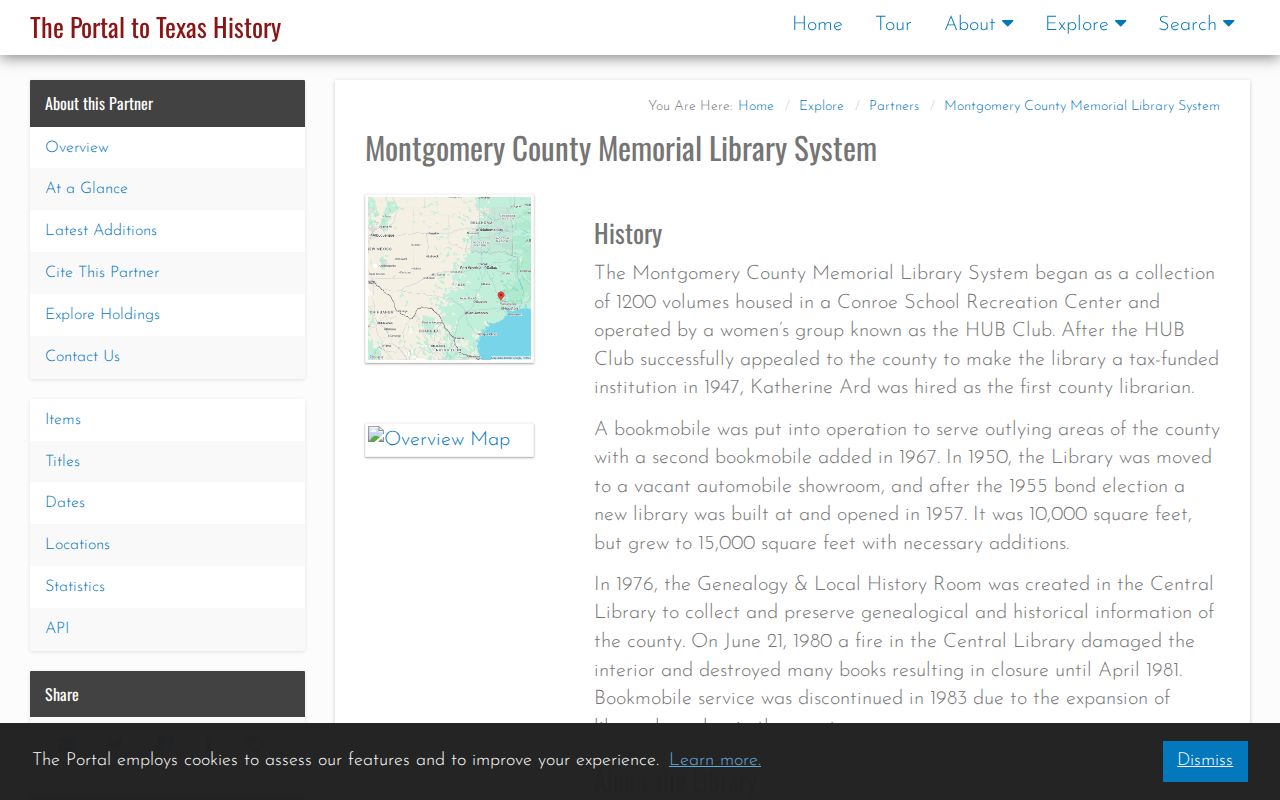
The UNT collection works as a companion source. Its names and local events can help interpret a single directory line.
Conroe Courier Directory Leads
UNT reports about 584 digitized items in the library partner collection. Of those, 564 are Conroe Courier items. The material reaches from the nineteenth century through the 1940s. It spans four collections, eight decades, and one yearbook. That reach has a payoff: a newspaper search often beats a late twentieth-century directory shelf for an older Conroe name. A Courier page can surface an obituary, social notice, business opening, fire report, or street reference. Check OCR against the image, especially for surnames and older type.
No separate public obituary-index title or complete date run appears. So the practical fallback is the library room, digitized Courier pages, local microfilm, and the county or state death-record channel when a formal record is needed. Note: Newspaper notices can corroborate a date or place, but they are not a complete roster of Conroe households.
Reading a Conroe City Directory
According to TSLAC, a city directory commonly lists a name, street address, and telephone number. Many add a spouse or household note, an occupation, a workplace, and a tenure mark. The arrangement varies. Read the key printed in each Conroe volume. Check it before trusting any symbol. Historic books can seat someone at a business, boarding house, apartment, or rural route. A line is a period clue rather than a full household count.
| Name line | Surname and given name, often centered on the listed householder. |
|---|---|
| Street line | A period address that should be copied exactly before comparing it with a map or deed. |
| Telephone | A period contact detail that can help distinguish same-name entries. |
| Family notation | A spouse or household notation may appear, but absence does not rule out family ties. |
| Activity and tenure marks | Possible occupation, workplace, or owner-status clues, interpreted only with that volume's key. |
A directory opens from the name side or, where offered, the address side. Photograph the abbreviation key first. A familiar short mark in one publisher's book may carry a different local meaning in another's.
- Criss-cross directory
- The address-ordered portion of a directory that can turn a street line into an occupant or business lead.
- Householder index
- A name arrangement centered on the listed household head rather than every person connected to an address.
- Abbreviation key
- The volume's own explanation of short marks and labels. It should be read before interpreting an entry.
- Period snapshot
- A record of what the directory reported for that edition, not a statement about a current Conroe resident.
Conroe City Directory Access
TSLAC keeps its print and microform directories on site in Austin. Staff will not run directory searches over the phone. They will not email scans either. So plan the visit. Bring names, spelling variants, a likely year, and a street or group name, or ask a local library what it holds before you drive.
Other routes exist. The UNT Portal to Texas History, the UT Dolph Briscoe Center, WorldCat, and library editions of Ancestry or HeritageQuest can all hold Texas directories from many towns and decades. Still, none of them proves a given Conroe book was digitized. You must check the exact title and year yourself. The TSLAC guide lays out these limits and partner routes in plain terms.
Ask at the Reading Room desk before assuming a Conroe city directory volume exists as a digital scan.
Partner channels can confirm a verified holding and spare you a long search.
Conroe Directory Collection Gaps
Gaps in the collection have a local cause. The Central Library opened its Genealogy & Local History Room in 1976. Fire struck on June 21, 1980. The blaze damaged the interior and destroyed books. The library stayed closed until April 1981. So a missing local-history item may have been burned, moved, or digitized later. An absence in the holdings never proves a thing. A name or event may still appear in Conroe records.
- 1911: A Conroe newspaper reported a fire that burned much of the courthouse-area business district and left three buildings.
- 1976: The Central Library established its Genealogy & Local History Room.
- June 1980: Fire damaged the library interior and destroyed books.
- April 1981: The Central Library reopened after its closure.
- 1984 through 1992: TSLAC's verified Conroe directory snapshots begin with the four listed editions.
The 1911 event offers a story clue for downtown research. A business name from before the fire may live on in newspaper notices, deeds, or later references. Modern street numbers may not line up, but the paper trail often still does.
Tracing Conroe City Directory Households
Start a household trail with one exact line. Then move outward from there. Keep the original spelling, street form, phone number, and abbreviation exactly as printed. Check that entry against the next confirmed Conroe directory year. Then test any apparent change with a dated newspaper, map, census schedule, or formal county record. Census schedules open under the 72-year rule. That makes them historical comparison records rather than a current lookup.
- Find the surname or address in one of the four verified Conroe directory years.
- Copy each displayed field and the page's abbreviation key before normalizing any wording.
- Check the same name and street in the other verified editions, noting moves, absences, and changed telephone lines.
- Use a criss-cross section, if the volume has one, to test the address as an occupant or business lead.
- Pair the dated line with the nearest released census, a Courier page, a yearbook, or a deed and parcel record.
- For a later address trail, use the current Conroe street directory workflow rather than treating an old printed entry as current.
A name that drops out can signal a move, a death, or an altered listing. It can also be a plain omission. Match the next source to the question you actually have. A newspaper suits a notice. The Library of Congress map gives building context. A deed shows a recorded party role. A census schedule captures a released household snapshot.
Conroe City Directory Referrals
The Montgomery County Genealogical & Historical Society meets at the library's Genealogy and Preservation Center. Meetings generally fall on the second Saturday from September through May. The Montgomery County Historical Commission keeps track of historical markers and cemetery locations around Conroe. Either group can help you identify a named collection. A volunteer there may know a cemetery custodian, or the local term for a record set.
Arrive with a narrow request: spelling variants, an approximate year, and a street in Conroe. A volunteer can then steer you toward a newspaper reel, cemetery book, or manuscript. A city directory volume may also be within reach. That keeps a family-history question from turning into a current personal profile.
The society's official site is the right first contact for that local research community.
A local referral can tell you where a historical source sits. The official custodian still verifies the formal record, and that division of labor serves a Conroe search well.